


About the James Lind Alliance
The James Lind Alliance (JLA) is a non-profit making initiative bringing patients, carers and professionals together in JLA Priority Setting Partnerships (PSPs). The JLA PSPs identify and prioritise unanswered questions or evidence uncertainties that they agree are the most important, so that health research funders are aware of the issues that matter most to the people who need to use the research in their everyday lives.
JLA PSPs use a well-defined and transparent process to ensure participation from a diverse range of stakeholders, with balanced inclusion of people with lived experience, caregivers, and health and care professionals. Please visit the official JLA webpage to find out more about the JLA methodology and the Childhood Deafness and Hearing Loss Priority Setting Partnership.
About the JLA PSP in childhood deafness and hearing loss
The PSP was launched in the UK in November 2023. The Steering Group membership included patients, carers, young people and professionals. The project was led by the University of Manchester in conjunction with researchers from Aston University, Lancaster University, our parent partner, and the National Deaf Children’s Society.
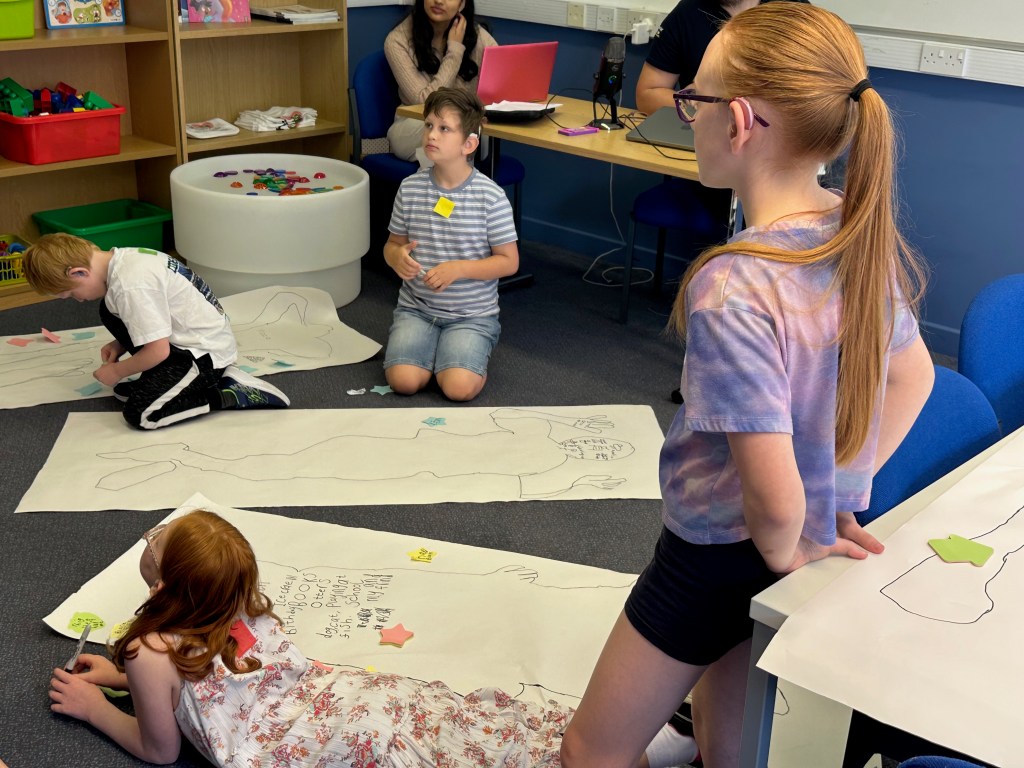
As the first step of our PSP, we set up an online survey (first survey) which ran from April to July 2024. Respondents submitted over 1,200 ideas for research questions in the first surveys. In parallel to the online survey, three activity-based children’s focus groups were held across the UK with expert facilitators to involve deaf children and young people. These children’s focus groups provided the PSP with insights into what is important to children who are deaf. The raw questions and input from children focus groups were refined and summarised during a full day face-to-face meeting involving the steering group. Those summary questions were then checked against existing research evidence to identify ‘true’ uncertainties. The result was a collection of 59 summary questions. These summary questions were listed in a subsequent online survey (second survey), which was held from February to April 2025. This time, stakeholders were asked to choose their personal ‘Top 10’ questions from the list of 59 questions.
For all the surveys conducted as part of this PSP, there were always at least two versions running in parallel: one in English and one in BSL.
The second survey enabled the researchers to shortlist the 21 most popular questions. The shortlisted 21 questions include the top 13 ranked questions from professionals and the top 13 from people with lived experience, with 5 questions overlapping between the two groups. This selection also happens to include 13 questions mentioned by the children during their focus groups.
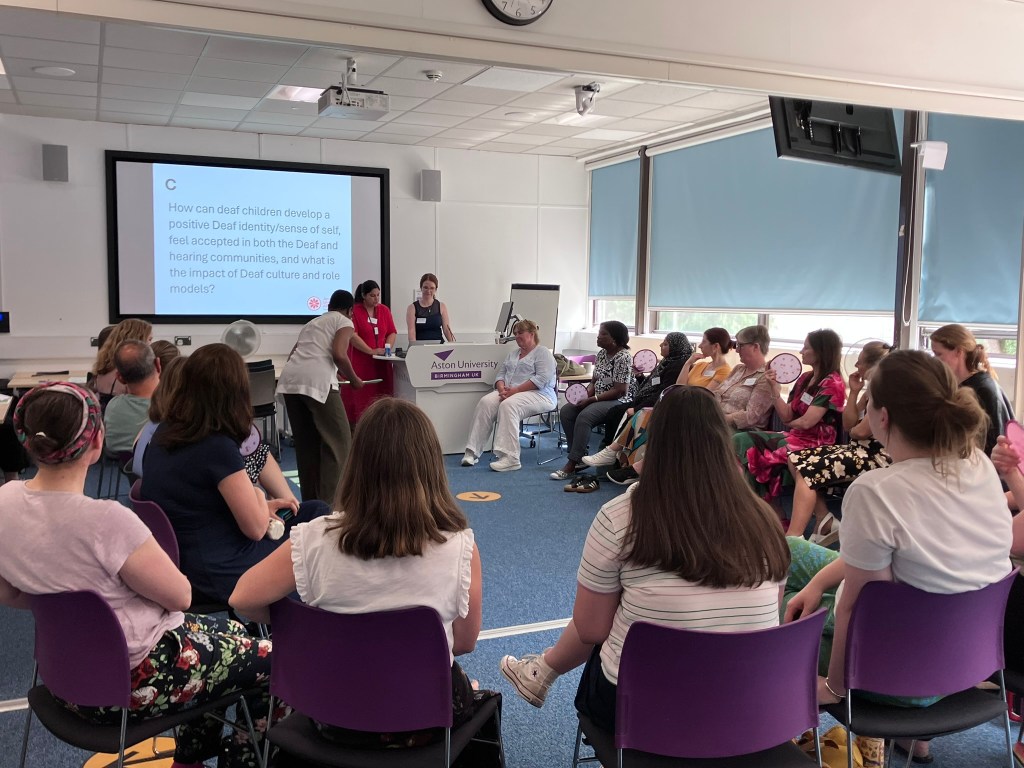
A full-day workshop was then held on 21st June 2025 to bring together 22 clinicians, educators, parents of deaf children, and deaf young people to prioritise, by consensus, the final ‘Top 10’ unanswered research questions out of the shortlisted questions. On 12th July, the child-friendly half-day workshop was held in London, in which ten children aged 7-16 determined their ‘Top 10’.
 Childhood Deafness Research Network